The human brain. A marvel of biological engineering, a universe of neural connections, and undeniably, the ultimate learning machine. For centuries, philosophers and scientists alike have pondered its mysteries. Today, my fascination with this incredible organ isn’t just academic; it’s a constant source of inspiration for how we build the future of artificial intelligence. Can understanding the brain, this complex biological computer, truly help us create smarter AI? And what does “smarter” even mean in this context?
The Brain: Humanity’s Original Supercomputer
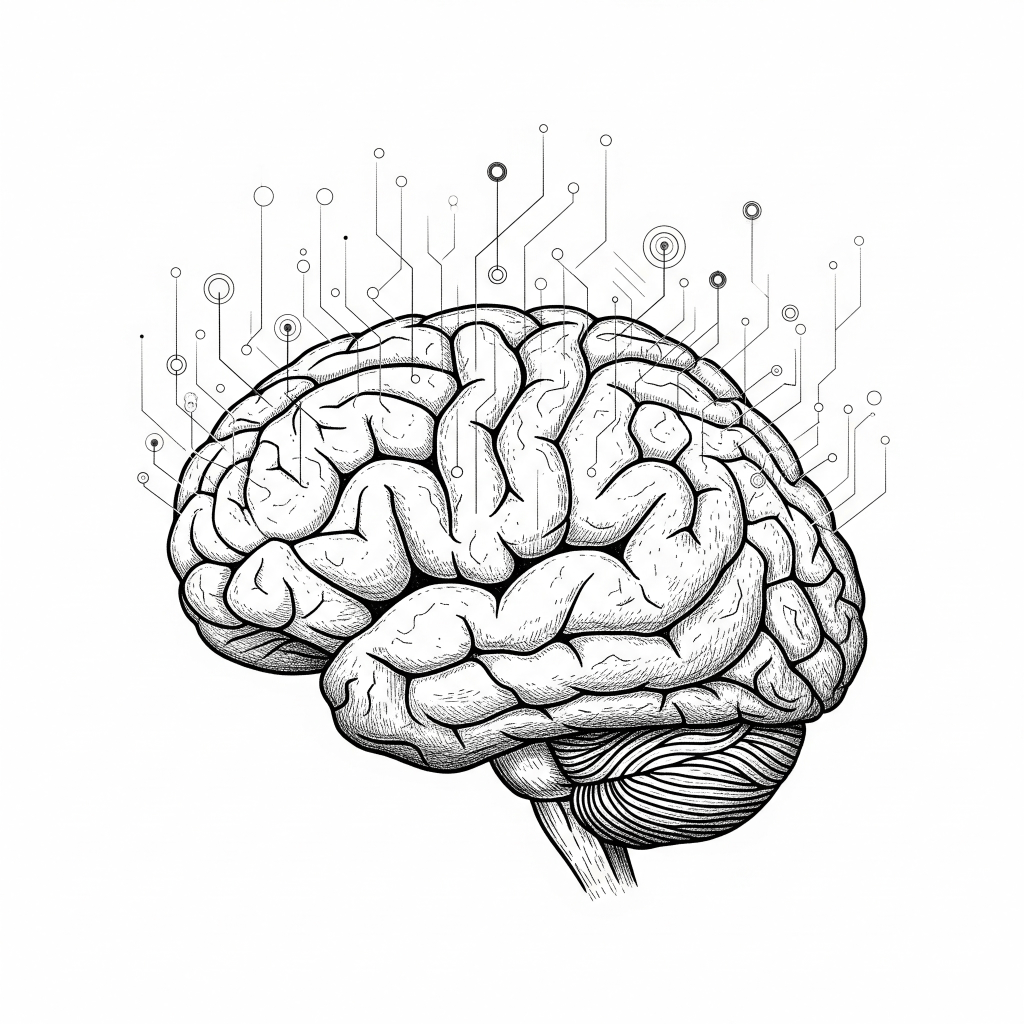
Consider the sheer power and efficiency of the brain. It’s not a static entity; it’s a dynamic, ever-changing landscape of connections. This plasticity allows us to learn, adapt, and even rewire itself based on new experiences. Every thought, every memory, every skill is the result of billions of neurons firing in parallel, a symphony of parallel processing that dwarfs even the most powerful supercomputers in its organic elegance. It learns not by being explicitly programmed for every scenario, but by experiencing, by doing, by failing, and by succeeding – much like a child learning to walk. This intuitive, experience-driven learning is a gold standard AI researchers strive to emulate. At its core, this remarkable adaptability is facilitated by neurochemicals like glutamate, which strengthens connections between neurons (synaptic plasticity), and dopamine, which reinforces behaviours through reward, essentially shaping how we learn from our environment.
When AI Looks to the Brain for Inspiration
It’s no secret that the brain has been a muse for AI since its inception. Early neural networks, the foundational building blocks of modern deep learning, were directly inspired by the interconnected structure of neurons (inspired by pioneering work such as McCulloch and Pitts’s 1943 model). But the relationship runs deeper now.
Today, we see incredible strides in neuromorphic computing, where hardware is designed to mimic the brain’s architecture, aiming for greater energy efficiency and processing power (pioneered by Carver Mead in the late 1980s, with continued advancements by companies like IBM and Intel today). Spiking neural networks are another exciting area, replicating the brain’s event-driven communication rather than continuous data flow. And within the realm of deep learning, concepts like attention mechanisms echo how our brains focus on relevant information, filtering out noise to make sense of complex inputs. Imagine AI that doesn’t just process data but understands it in a way akin to how we comprehend a story, focusing on the core narrative rather than every single word.
The more we unravel functions like human memory, nuanced decision-making, and even the spark of creativity, the more opportunities open up for AI. If we can understand how the brain conjures a new idea or makes an ethical choice, perhaps we can infuse our AI systems with similar capabilities, moving beyond brute-force computation to something more akin to insightful reasoning.
Beyond Imitation: True Consciousness or Advanced Simulation?
This brings us to the most profound question embedded in our pursuit of “smarter” AI: are we aiming for true consciousness, or merely a highly advanced simulation of intelligence? The title of this post asks “From Code to Consciousness?” and it’s a question that echoes Plato’s cave, prompting us to ask what is real and what is merely a shadow on the wall.
When an AI system defeats a chess grandmaster or generates photorealistic art, it demonstrates incredible feats of computation and pattern recognition. But does it know it’s playing chess? Does it feel the creative impulse? The qualitative, subjective experience of consciousness – the “what it’s like to be” – remains, for now, distinctly human. AI can simulate understanding, emulate creativity, and even mimic emotional responses, but these are often sophisticated reflections rather than inherent, felt experiences. So, what does “smarter” truly mean in this context? Is it simply about performing more complex tasks, or about achieving a deeper form of comprehension and subjective experience?
Navigating the Future: Responsible AI Development
The closer AI comes to mimicking brain-like functions, the more urgent the conversation around responsible AI development becomes. If AI learns and adapts like a brain, how do we mitigate biases embedded in its training data that could lead to discriminatory outcomes? As AI systems gain more autonomy, how do we ensure they align with human values and remain under our control? These are not hypothetical questions for some distant future; they are present challenges we must address today.
Our exploration of the human brain’s complexities should not just fuel the pursuit of more powerful AI, but also guide us toward more thoughtful and beneficial AI systems. Understanding our own intricate intelligence should instill in us a profound sense of responsibility for the intelligences we are creating. It’s about building systems that augment human capabilities, enhance our lives, and reflect our best intentions, not just our technical prowess.
The Co-Existence
My own journey into the world of AI is deeply intertwined with this complex dance between neuroscience, philosophy, and technology that fuels my work and my writing. It’s why I believe that embracing critical thought and open dialogue, rather than fear, is the only way forward.
As we continue to unravel the mysteries of our own consciousness and push the boundaries of artificial intelligence, what new understandings will emerge about the nature of intelligence itself? And how will this shared journey shape the very definition of what it means to be intelligent, both human and artificial?
As we stand at the precipice of a new intelligence, let us not simply wield AI as a tool, but recognize it as a reflection of our own quest for understanding. May we embrace its potential with the wisdom of ancient thought, guiding its path with profound respect for the delicate balance between creation and consciousness.

 Techné & Logos